
IT & Electronic Product Testing, considering the rapid evolution of technology and ever-strict regulations every year, has become a key need for any business operating in the field of electronics and IT. To manufacturers, importers, OEMs, and brand owners, product testing is no longer simply a matter of quality but one of regulatory approval, market access, risk reduction, and long-term credibility of the brand.
This detailed guide shall explain what IT and electronic product testing is, why it is important to B2B businesses, applicable standards, testing process, compliance issues in India, common challenges, and how a professional testing partner will be able to support business growth.
What is IT and Electronic Product Testing?
The testing of IT & Electronic Products involves a well-structured assessment of information technology equipment and electronic products, assuring conformance with basic safety, electromagnetic compatibility, performance, and efficiency.
Testing ensures that products are:
- Safe for the end user
- Reliability under normal and extreme operating conditions
- Free from electrical and electromagnetic hazards
- Compliant with binding regulatory requirements
Typical products it covers, includes:
- Computers, laptops, servers, and monitors
- Network devices: routers, switches, modems
- Power adapter, charger, and SMPS
- Consumer electronics
- Industrial IT and control equipment
Why IT & Electronic Product Testing Is Important For B2B Enterprises
In the case of B2B organizations, non-compliance may affect the entire business. The role of testing is quite significant in the successful functioning of the business.
1. Mandatory Regulatory Compliance
There are various electronic items that need to adhere to the BIS CRS/IS/IEC norms as well as EMC norms before they are sold either in India or exported.
2. Risk Mitigation & Legal Protection
It remaining untested can cause electrical hazards, EMI problems, or product failure—resulting in legal proceedings, recalls, or loss-of-image problems.
3. Faster Market Entry
Pre-compliance and final compliance tests likewise play an important role in avoiding approval delays and/or costly redesigns later on.
4. Enhanced Brand Trust
B2B buyers like to have certified products, and these products must be reliable for long-lasting usage.
5. Cost Savings in the Long Run
Early-stage testing avoids defects that could result in losses during mass production.
Key Standards Applicable to IT & Electronic Products
Depending on the product type and/or markets involved, the following may be applicable:
- IS/IEC 62368-1 – Safety of IT & audio/video equipment
- BIS CRS Registration – Mandatory for various electronic devices in Indian markets
- EMI/EMC Standards – Electromagnetic Interference & Immunity
- IEC 61010 – Safety for measurement, control, and laboratory equipment
- Energy Efficiency Standards – Power consumption and efficiency
Compliance with the correct standard is essential for regulatory acceptance.
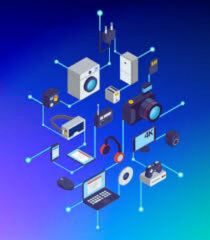
Types of IT & Electronic Product Testing
1. Electrical Safety Testing
Ensures protection against:
- Electric shock
- Fire hazards
- Excessive temperature rise
- Insulation and grounding failures
2. EMI/EMC Testing
Validates that the product:
- Does not emit harmful electromagnetic interference
- Operates correctly in electromagnetic environments
3. Performance & Functional Testing
Confirms that the product performs as intended under:
- Normal usage
- Continuous operation
- Peak load conditions
4. Environmental & Reliability Testing
Evaluates durability against:
- Temperature variations
- Humidity
- Mechanical stress
- Long-term operational wear
5. Energy Efficiency Testing
Measures power consumption, standby losses, and overall energy performance.
IT & Electronic Product Testing Process (Step-by-Step)
Step 1: Product Evaluation
Understanding product specifications, usage environment, and applicable standards.
Step 2: Standard Identification
Selecting relevant BIS, IS, IEC, or international standards based on product category.
Step 3: Sample Submission
Providing test samples along with technical documentation.
Step 4: Laboratory Testing
Conducting safety, EMC, performance, and energy tests as required.
Step 5: Test Report Generation
Issuance of detailed and compliant test reports from accredited laboratories.
Step 6: Regulatory Approval
Using test reports for BIS CRS or other mandatory registrations.
Mandatory Compliance in India: BIS CRS for IT & Electronic Products
Under the Bureau of Indian Standards (BIS) Compulsory Registration Scheme (CRS), many IT and electronic products must be tested and registered before being sold in India.
Products Covered Under BIS CRS
- IT equipment
- Power adapters
- Electronic control devices
- Consumer electronic products
Without BIS CRS registration:
- Products cannot be legally marketed
- Imports may be rejected at customs
- Businesses may face penalties or seizure
Testing must be conducted at NABL-accredited and BIS-recognized laboratories.
Documents Required for IT & Electronic Product Testing
- Product technical specification
- Circuit diagrams
- User manual
- Bill of materials (BOM)
- Brand authorization letter (for importers)
- Manufacturing details
Accurate documentation ensures faster approvals and avoids rework.
Timeline for Testing & Certification
The duration depends on:
- Product complexity
- Number of applicable tests
- Compliance readiness
On average:
- Testing: 7–15 working days
- BIS CRS registration: 2–4 weeks
Early planning helps reduce delays.
Common Reasons for Test Failure
- Poor insulation design
- EMI emission beyond limits
- Overheating components
- Incorrect labelling or documentation
- Non-compliant power ratings
Pre-compliance testing helps identify and fix these issues early.
Cost Factors in IT & Electronic Product Testing
Testing costs depend on:
- Product category
- Applicable standards
- Number of tests required
- Certification scope
While testing involves upfront investment, it prevents far greater losses from non-compliance.
How Pride Testing Can Help Your Business
Pride Testing Services provides end-to-end IT & Electronic Product Testing solutions for manufacturers, OEMs, and importers. With NABL-accredited facilities and experienced compliance experts, we support:
- Electrical safety testing
- EMI/EMC testing
- BIS CRS testing & documentation
- Pre-compliance guidance
- Faster regulatory approvals
Our goal is to help businesses achieve compliance, quality assurance, and faster time-to-market with confidence.
Conclusion
IT & Electronic Product Testing is a strategic requirement for B2B organizations operating in regulated markets. From ensuring safety and compliance to building trust and accelerating market entry, testing plays a vital role in business success.
Partnering with a reliable testing laboratory ensures regulatory confidence, product quality, and long-term growth.